

Dinner Highlight: Lowell Cultural Strategy Co-Hort Dinner
a nod to the spices we come from

Hello everyone,
It’s been a minute. I’ve been keeping busy and keeping warm—hope everyone else has had a wonderful time with friends and family! I’ve got lots to share and talk about, but for right now, I wanted to share about a cooking gig I completed recently.
About six months ago, I became a Cultural Strategy Cohort member for my hometown, Lowell, Massachusetts. This is run by Assets for Artists, a non-profit whose goal is to help creative folks of all mediums and practices thrive in their fields through workshops and resource sharing.
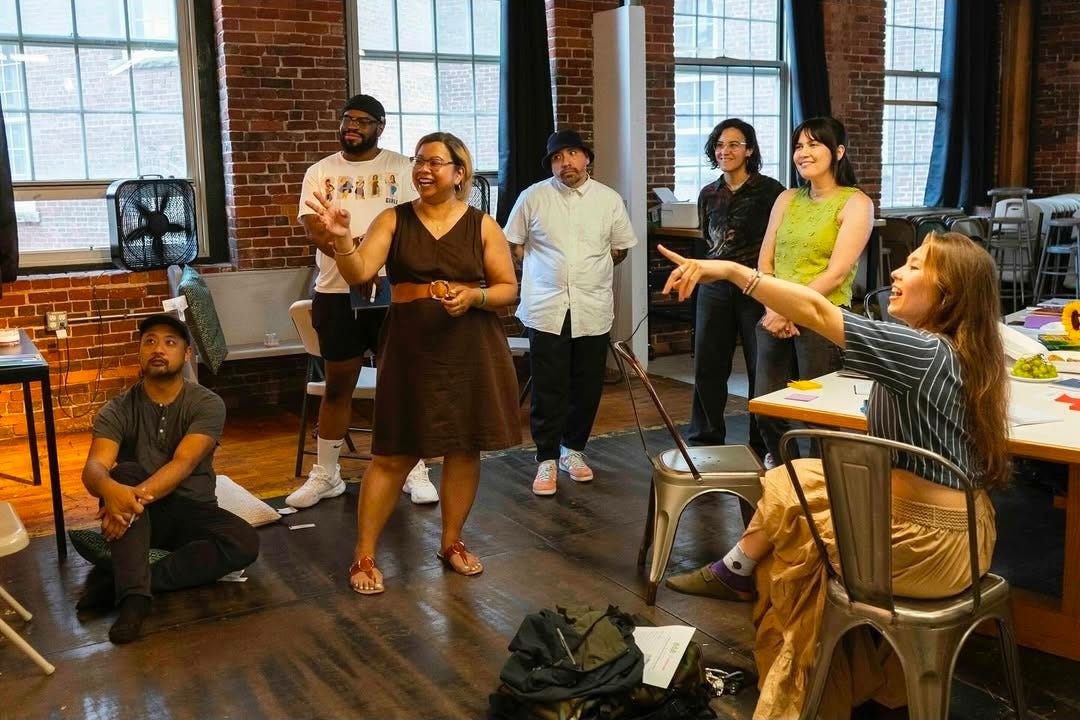
It was a great way for me to see how my own practice could be contextualized within the city that raised me. For a long time, Lowell was this place I was trying to get away from. Not because there was anything bad—I have great friends, amazing family support, and by all means, if there’s an alternate reality where I open my own restaurant in the city, I think I could be happy. —BUT that’s for another time, another Johnny. I needed to see the world, to travel and savor stories up close and personal, and I am grateful that I had that opportunity in spades.
Yet as the mountain climber climbs and takes in the sunsets atop snow-covered peaks, he eventually has to go home and share those stories. That’s all we are: stories. The tales we tell ourselves, each other, our communities—they create value and meaning in the extraordinary and mundane. It’s probably just a bag that says “Market Basket,” but it can also be the first job a kid had in high school where he learned the value of earning a buck.
SO— when I was asked to participate in the cohort, I was excited to see what possible intersecting storylines would emerge and develop. I met folks who lived in and around my hometown who were working on their craft, honing their voices on the page, canvas, and mic, and curating a fantastic gallery show right in downtown. I was able to see that the Lowell I left when I was 18 had grown and become the Lowell I need now that I am 35. It was a pleasure and honor to witness how interwoven our values were, and the program’s “progress over product” stance helped us develop a common language. We will likely keep working together and develop something that the creatives in the city can lean on, and I sense some kind of bridge will be made that is a unique design of the cohort.
—but that’s a story for the future.

I wanted to bring you into a story of the now.
“Johnny, how would you like to cook for our celebration of completing the cohort in December?”
“Yes, and…”
Then I was off to the races. I sat and thought about what the menu could be. This was a team made up of various ethnic backgrounds: Jamaican, Puerto Rican, Korean, Chinese, Cambodian, Laotian, Italian, American, European, Filipino, and the many shades in between us all. How do you make a menu that represents what this diverse group of folks are and where they came from?
Well… the answer is the menu below. I am quite proud of this one, and with that said, here it is:
Lowell Cohort Dinner 2025
Johnny Chanthavong
Polenta Taragna with Mushrooms and Sage
Buckwheat, Cornmeal, mushrooms, sage
An Italian cornmeal porridge with buckwheat flour—a warm hug from an old friend. I wanted to open with this gentle hello. We use portobello, oyster, and baby bella mushrooms, a grounding spirit, mixed with sage for an earthy wisdom.
Turkey, a Cultural Strategy Symbol
48hr dry brined, roasted Turkey with a 12-spice Co-Hort Blend*
Turkey is America’s canvas. It holds conversations of colonization and the trials of generations. We trace the mythology of America’s founding to this one bird. We’re taught there was a feast, a sharing of harvest, and that without the kindness of the Wampanoag people—specifically the Patuxet band on whose land the Pilgrims settled— many of the Mayflower colonists would have died.
It was a collective struggle, a shared meal, a moment told from the colonizer’s perspective. Today when we celebrate Thanksgiving, I wonder how much of it is remembered as a distorted history. But we also have a chance to amend it—to attach meaning to how we eat, why we eat, how we remember, and how to share in our struggles to truly see one another. I believe history can be an active telling instead of a passive retelling.
So I chose turkey as my canvas. This bird has nourished souls for thousands of years, not just 250 years of the United States. I wanted to see the edges of its canvas and paint it with the colors of our Lowell cohort. We are all from somewhere else; our great-grandmothers’ pantries are lined with scents from forests, fields, and islands across the globe. That’s why I chose to create a spice rub that draws far and wide from Korea to Jamaica—to contextualize our individual journeys against the backdrop of an iconic Native American source of nourishment.
*spice rub mix in depth, below. Most ingredients listed.
Curried Fried Rice
Jasmine rice, Curry Spice Blend
A nod to the places where rice and curry are king. Fried rice itself tells a story of Asian immigration and adaptation; in this form it can function as a bridge between many cultures by way of curry.
Sesame Sweet Potato Noodle Salad
Chilled Sweet Potato Noodle, Truffle Oil, Mushroom Soy Sauce, Scallions, Ginger
Inspired by Korean Naengmyeon, this is a dish of playful discovery. It came from necessity at a recent gig, and I’m excited to push its boundaries with you—an invitation to embrace the new and fun.
Seasoned Roasted Veggies
Zucchini, Yellow Squash, Carrots
A French painter once told me roasting reveals a vegetable’s true potential. I’ve agreed ever since. To me, roasting unlocks a captured sunshine—a warm, comforting energy perfect for winter.
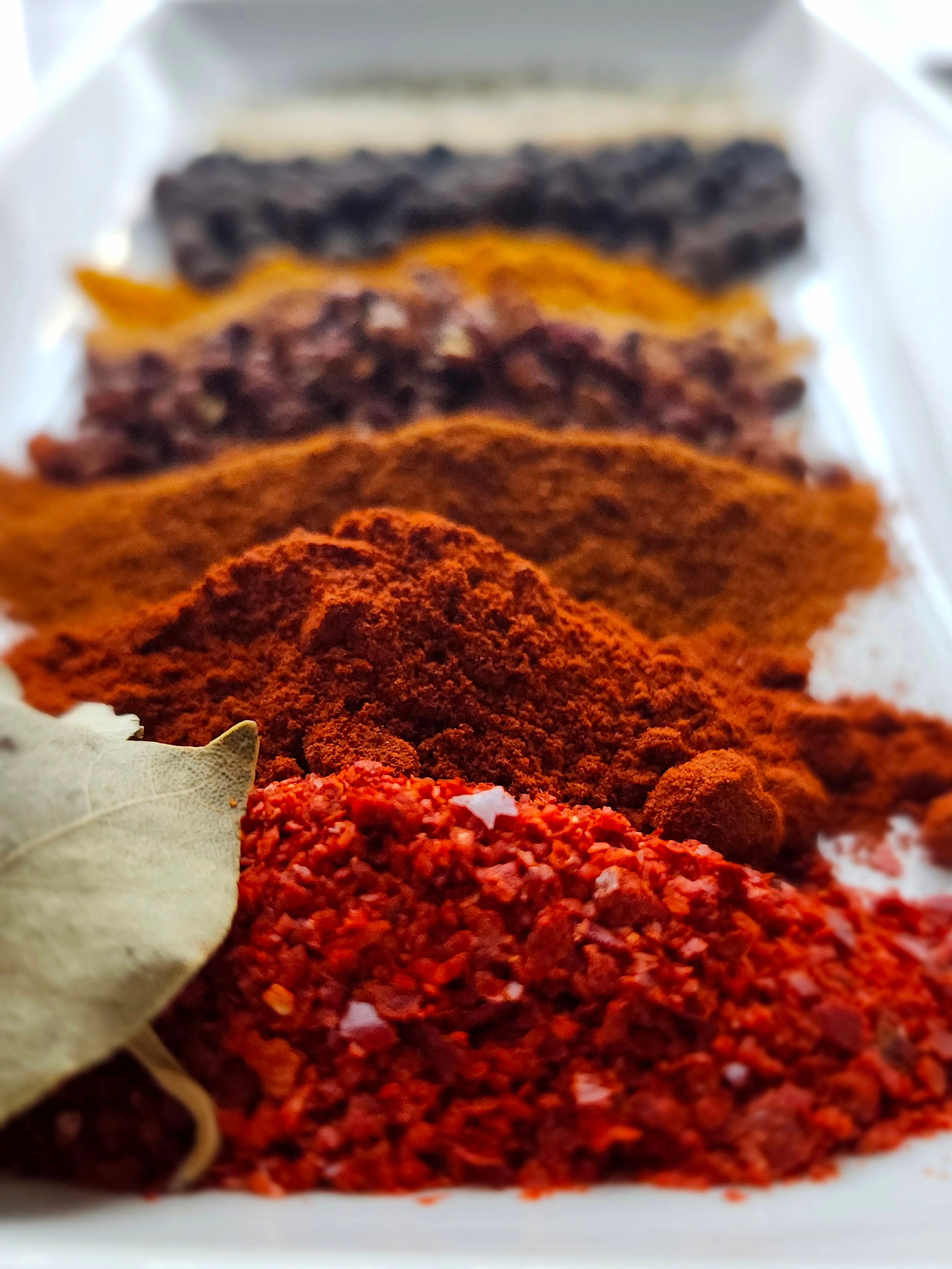
Spice Mix: Lowell Cultural Strategy Cohort Mix 2025
This blend is a timeline of our collective existence. We are artists and creatives from every corner of the planet. Just being here together took centuries of farming, traveling, and storytelling. To cook, to share your art, is to nourish our collective story.
Joy can become resistance when the hands that feed nourish the souls that sing. We have much work to do, but for now, with this spice blend, let’s look at what we’ve achieved. It could just be cumin, or maybe it is an access point to our ancestors. Even more spectacular is their interconnected play; allspice saying hello to annatto is like a Jamaican grandmother on vacation in Puerto Rico.
This is as magical as satellites, wifi, and artificial intelligence. That’s to say this feels like the natural intelligence innate in our art making, ours by right of existing, part of the subscription plan that comes with being born an Earthling.
For me, what makes a meal important is more than taste. It’s asking the land for permission to move forward while holding reverence for those who came before us. That’s what it means to cook and break bread in the face of injustice, oppression, and misguided greed. Anytime you use salt or black pepper, remember whole countries had people who lived and died to make something tasty. The access to food, flavors, and ingredients we have today is magic built upon the backs of our ancestral connection to the Earth itself.
With that said, I hope by bridging our stories through a spice blend that represents this cohort, we can see ourselves on the plate and at the table. May we find balance and harmony in our individual stories and savor the meals we share together with more depth, kindness, and empathy.
A breakdown of each spice. I used AI to contextualize dates and origins—a starting point for your own dialogue and discovery.
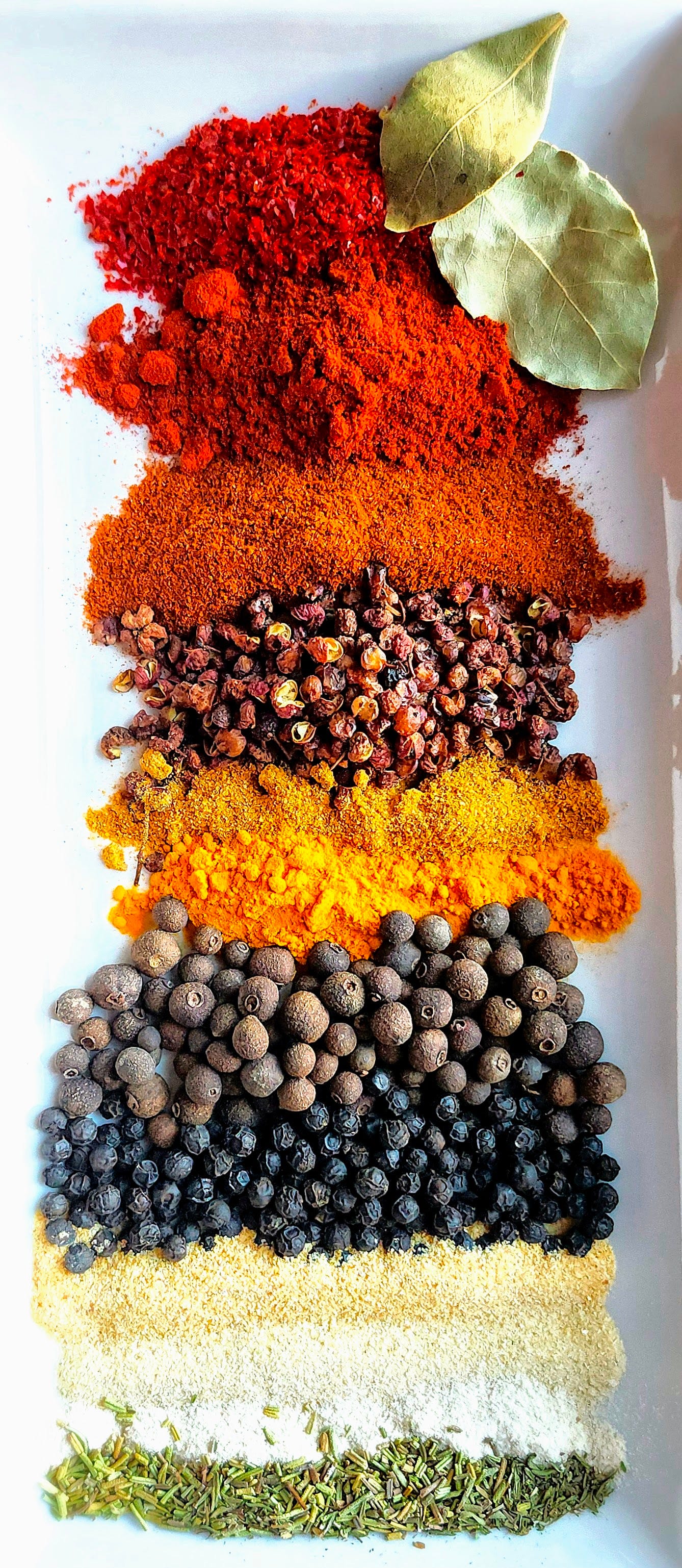
Annatto (Achiote)
Origin — Caribbean (Taíno homelands). In use for 3,000+ years before European contact.
History: Used by the Taíno for dye, food, and ceremony. It persisted through Spanish colonization, carried by enslaved Africans and Indigenous cooks, surviving centuries of assimilation.
Spirit: A red shield of protection and vitality—the grounding ancestor in our blend.Sichuan Peppercorn
Origin — Southwest China. Documented for ~2,200 years.
History: Spread through ancient Chinese trade, remaining largely in East Asia until the modern diaspora.
Spirit: The spice of awakening—a numbing spark that clears blockages and sharpens perception.Gochugaru (Korean Chile Flakes)
Origin — Andes, arrived Korea 1500s.
History: Came through the Columbian Exchange, adapted by Korean farmers, and became essential to kimchi and survival.
Spirit: The warmth of collective survival—the glowing ember of preservation and lineage.Rosemary / Thyme / Sage
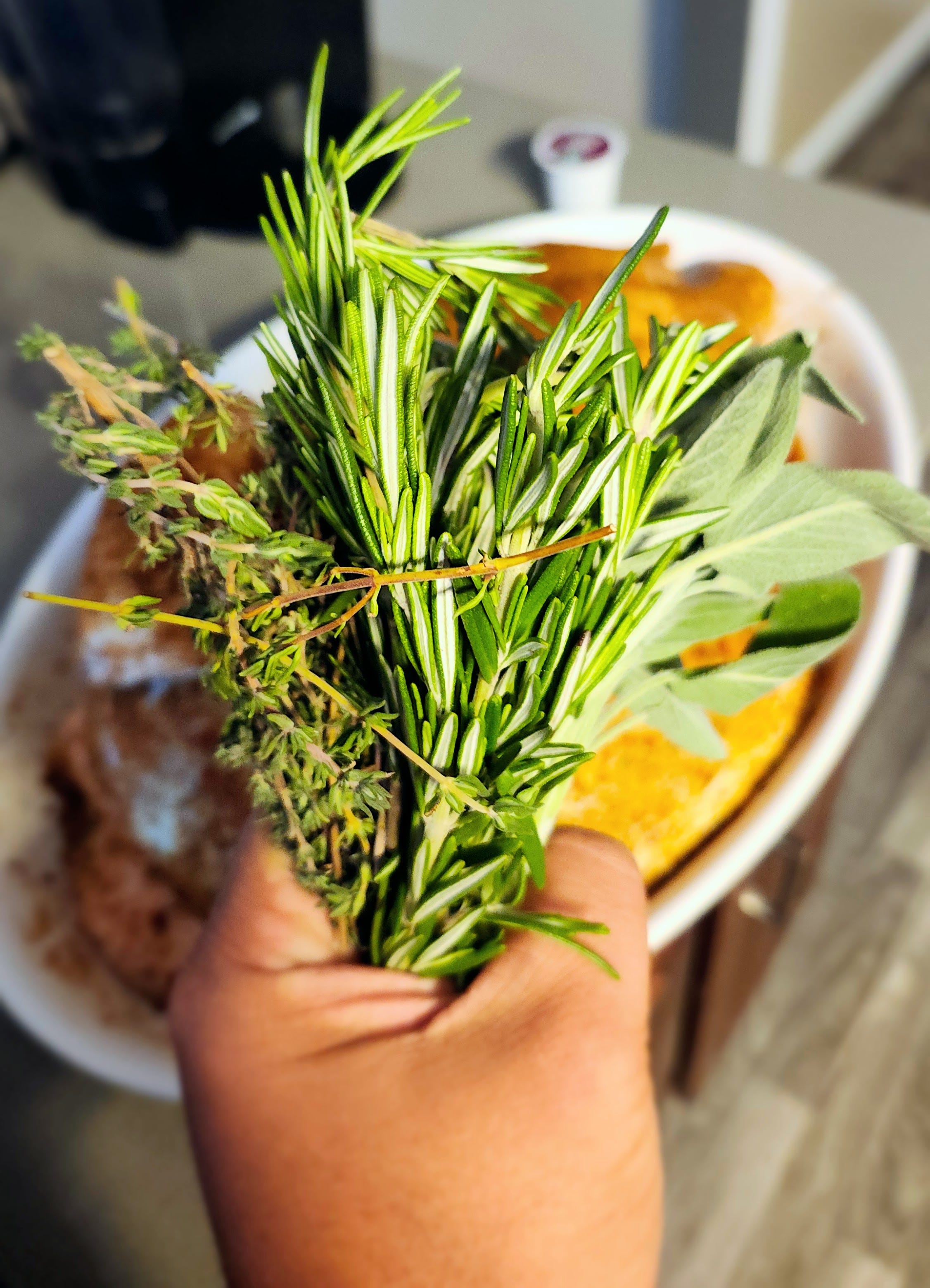
Origin — Eastern Mediterranean. 3,000–4,000 years old.
History: Spread by the Roman Empire and later European colonization, carried worldwide by migration.
Spirit: A triad of Old-World breath: purifying memory, strengthening courage, offering cleansing.Allspice
Origin — Jamaica. Used for 2,000+ years before 1492.
History: A Taíno spice prized by colonists, woven into the Atlantic plantation economy and Afro-Caribbean cuisine.
Spirit: Holds ancestral fire—bridging earth and air with sweetness and smoke.Cumin
Origin — Levant. ~4,000 years old.
History: Traveled the Silk Road, moved through empires, and crossed oceans via colonial trade.
Spirit: The ancient merchant—the steady pulse that wards and protects journeys.Kampot Pepper
Origin — Coastal Cambodia. Cultivated since the Angkor era.
History: A prized export under French rule, nearly lost under the Khmer Rouge, now revived as a cultural symbol.
Spirit: The spice of resilience: small, luminous, persistent.Lemongrass
Origin — Mainland Southeast Asia. Used 1,500+ years.
History: Indigenous to the Mekong, entered global trade through French colonialism and modern diaspora.
Spirit: The clearing wind—it sweeps illness, refreshes the spirit, and opens the air.Scotch Bonnet Chile
Origin — Amazon Basin. Domesticated 5,000–7,000 years ago.
History: Forced across the Atlantic via the Columbian Exchange, shaped by plantation labor and African ingenuity.
Spirit: The firekeeper—carrying the bright, fierce heartbeat of the diaspora.Bay Leaf (Dahon ng Laurel)
Origin — The Philippines.
History: Used pre-colonially, blended with Spanish influence, and carried across the Pacific on trade galleons.
Spirit: The quiet guardian—its subtle fragrance signals cleansing, guidance, and the survival of memory.
Food is special, and it’s also very basic. I love that duality that a grain of rice can hold. On one hand, it’s a very simple carb that usually doesn’t have much flavor, but the beauty of a jade green rice paddy overlooking a valley in some misty village farm in Laos makes the thing a bit more special. Both of those things can exist, and they can shift according to needs and narratives. That’s all to say, the food we eat carries the lineage and stories of our ancestors, and to break bread together over the last few weeks of 2025 is important. It’s been a hard year for many, for reasons individual and communal. Some would say it’s been a hard five years, but every year when things get colder and the holidays come around, it’s nice to say: Welcome home, come eat, and how are you? — the simple, mundane, and the extraordinary is a meal shared with people you love.
Finally—if you enjoy my work, my writing, and want to see me keep going and push my storytelling culinary craft, please consider becoming a paid subscriber! I love this so much, and in a perfect world, I can pursue this craft and obsession to the ends of the Earth and around and around again, but I need help to get from place to place sometimes.
ALSO—if you’re curious about this particular spice blend, message me directly and I’ll see about sending you a jar of my hometown.
Thanks so much for reading!
Johnny
I wish you could see my smile as I read through this and feel the warmth of your cooking in the words. I love that you shared the spirit of the spices here as well!